
Is DIY 3D Rendering Worth It for Small Businesses?
In today’s competitive business landscape, small businesses are constantly seeking ways to stand out and attract customers. One strategy that has gained popularity is incorporating 3D rendering into their marketing materials and product presentations. However, an important question arises – is it worth it for small businesses to invest time and resources into DIY (Do-It-Yourself) 3D rendering?
For small business owners
Introduction
In today’s competitive business landscape, small businesses are constantly seeking ways to stand out and attract customers. One strategy that has gained popularity is incorporating 3D rendering into their marketing materials and product presentations. However, an important question arises – is it worth it for small businesses to invest time and resources into DIY (Do-It-Yourself) 3D rendering?
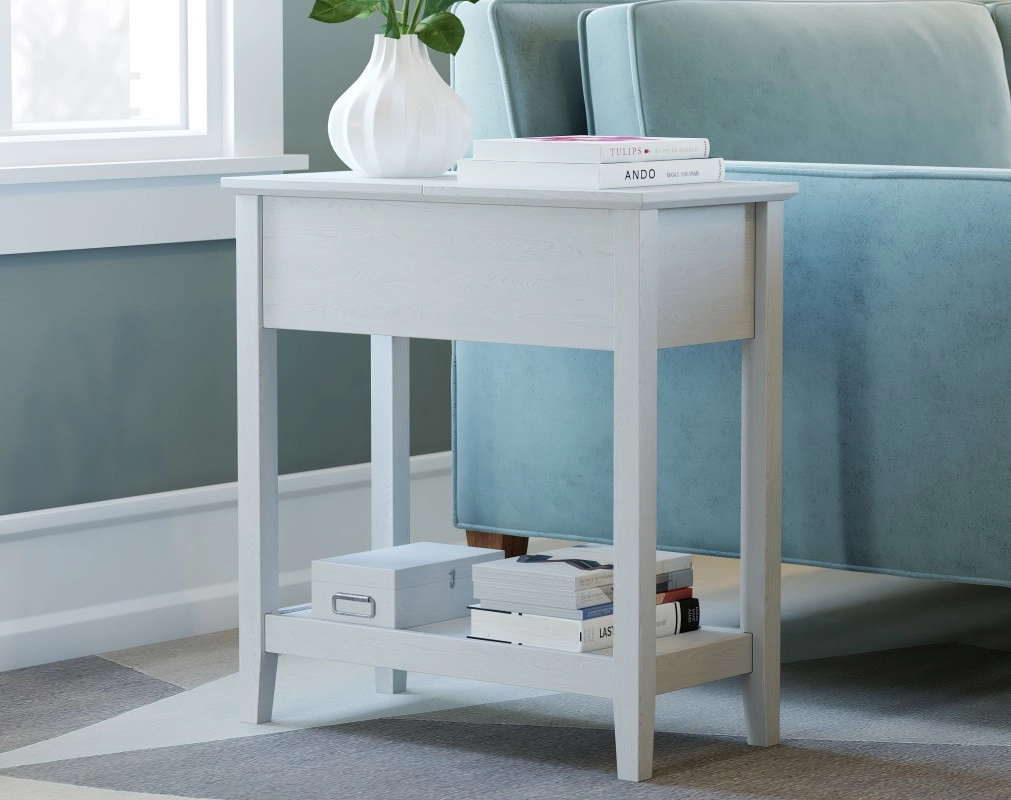
Why should small businesses avoid DIY 3D rendering?
Specialized Field
3D rendering requires specific skills and knowledge that may not be readily available within a small business. It involves understanding complex software, lighting techniques, and design principles. Without proper training and experience, achieving professional-quality results can be challenging.
Time-Consuming
Learning and mastering 3D rendering techniques takes time. Small businesses often have limited resources and tight deadlines. Attempting DIY 3D rendering can divert valuable time and energy away from core business activities, hindering productivity and growth.
Quality Concerns
Professional 3D rendering services are equipped with advanced tools and technologies that ensure high-quality output. DIY attempts may result in subpar visuals that fail to impress clients or customers. This can negatively impact the brand image and credibility of the business.
Costly Mistakes
Inaccurate or poorly executed 3D renderings can lead to costly mistakes. For example, if a product’s dimensions or features are misrepresented, it can result in manufacturing errors or customer dissatisfaction. Rectifying such mistakes can be expensive and time-consuming.
Lack of Consistency
Consistency is crucial for branding and marketing purposes. Professional 3D rendering services can maintain a consistent visual style across different projects, ensuring a cohesive brand identity. DIY attempts may lack this consistency, leading to a disjointed and unprofessional appearance.
DIY Tools vs Professional ArchViz Studio
To evaluate whether DIY rendering makes economic sense, businesses must examine how popular DIY software tools compare directly against dedicated architectural visualization studios across four core technical dimensions:
1. Visual Quality & Precision
DIY Tools (SketchUp, Sweet Home 3D, Blender): Sweet Home 3D generates basic blocky layouts suited only for rudimentary space planning. SketchUp excels at geometric modeling but produces flat, cartoonish materials unless augmented with costly render engines. While Blender features sophisticated Cycles rendering, achieving photorealistic PBR texture maps, realistic edge chamfers, and accurate subsurface scattering requires hundreds of hours of specialist expertise.
Professional ArchViz Studio: Commercial-grade photorealism featuring calibrated multi-layer PBR materials, micro-surface imperfections, true-to-scale dimensional accuracy, and production-ready marketing assets.
2. Lighting Physics & Optics
DIY Tools (SketchUp, Sweet Home 3D, Blender): DIY setups frequently suffer from incorrect lighting calculations, relying on flat ambient illumination or simple point lights. Sweet Home 3D and native SketchUp lack global illumination ray tracing, resulting in harsh, unconvincing shadows and zero light bounce fidelity.
Professional ArchViz Studio: Physically accurate ray-traced lighting pipelines simulating real-world daylight shifts, HDRI environment illumination, calibrated Kelvin color temperatures, and bounce light physics.
3. Hardware Costs & Infrastructure
DIY Tools (SketchUp, Sweet Home 3D, Blender): Photorealistic ray tracing requires workstations equipped with high-end RTX GPUs, abundant VRAM, and robust cooling. Rendering on standard office PCs causes machine freezing, crashes, and thermal throttling, demanding $3,000 to $6,000+ in hardware upgrades per seat.
Professional ArchViz Studio: High-throughput distributed render farms and dedicated cloud nodes handle intensive multi-pass computations instantly, requiring zero hardware investment from the client.
4. Time Investment & Opportunity Cost
DIY Tools (SketchUp, Sweet Home 3D, Blender): The steep learning curve across 3D modeling, UV unwrapping, camera composition, and color grading consumes hundreds of hours. For a small business, every hour spent troubleshooting render noise is an hour lost from client acquisition and design work.
Professional ArchViz Studio: Turnkey delivery with guaranteed production timelines, allowing internal teams to dedicate 100% of their energy to design excellence, client relationships, and business growth.
| Comparison Metric | DIY Tools (SketchUp, Sweet Home 3D, Blender) | Professional ArchViz Studio (7CGI) |
|---|---|---|
| Visual Quality | Schematic or flat visual output; noticeable digital artifacts; limited texture realism | Commercial photorealism; high-resolution PBR textures; seamless marketing-ready output |
| Lighting Physics | Basic ambient and directional lights; lacks complex indirect bounce and photometric accuracy | Full ray-traced global illumination, HDRI light matching, and authentic optical camera depth |
| Hardware Costs | $3,000–$6,000+ workstation investment; risk of computer lockups and hardware wear | $0 capital expense; production powered by high-capacity studio render farms |
| Time Investment | Hundreds of non-billable training hours; diversion from sales, design, and growth | Zero learning curve; turnkey delivery on agreed schedules with dedicated art directors |
Focus on What You Do Best
If you work in furniture manufacturing, architecture, or interior design, being more productive means spending your time on design, client relationships, and business growth – not struggling with 3D software
At 7cgi Limited, we provide high-quality 3D visualization services at truly affordable prices designed specifically for small businesses and growing studios. Our team delivers photorealistic product renderings, architectural visualizations, and immersive 3D presentations that help our clients win more projects and close more sales. Even if you don’t work with us, we can still provide advice on anything related to 3D visualization services.
Frequently Asked Questions
Is DIY 3D rendering cost-effective for small businesses?
While software like Sweet Home 3D, SketchUp, or Blender may appear free or inexpensive upfront, DIY 3D rendering is rarely cost-effective when factoring in the cost of high-end GPU workstations, software plugins, and hundreds of non-billable hours diverted from core revenue-generating business operations.
What software tools do beginners use for DIY 3D rendering?
Beginners and small studios typically experiment with Sweet Home 3D for simple 2D/3D interior layouts, SketchUp for rapid geometric massing, and Blender for open-source polygon modeling. However, achieving photorealistic results in these tools requires extensive knowledge of material science, UV mapping, and lighting physics.
Why do DIY 3D renderings often look fake or unrealistic?
DIY renderings usually lack subtle optical imperfections, micro-bevels on hard edges, physically based materials (PBR), and accurate photometric lighting. Without proper global illumination and realistic light bounces, rendered scenes appear flat, synthetic, and disjointed.
How much does outsourcing 3D rendering cost compared to DIY?
Professional architectural and product rendering services typically range between $100 and $500 per view depending on project scope. In contrast, building an internal DIY setup requires $3,000–$6,000+ in hardware, recurring software licenses, and substantial labor costs during the learning phase.
When does it make sense to hire a professional 3D studio?
Hiring a professional studio is recommended whenever visual assets face external clients, investors, or online consumers. Professional renderings protect your brand reputation, ensure accurate product dimensions, and deliver the photorealistic polish needed to win competitive bids and drive conversions.