

Industrial Product 3D Rendering Services for Machinery, Robotics, and Devices
We turn CAD files, prototypes, and drawings into photorealistic renders and animations that hold up in an engineering review and still sell on a trade show wall. Manufacturers and industrial teams across North America and Western Europe have worked with 7CGI since 2015.
Get Your QuoteIndustrial Rendering Samples for Machinery, Robotics, and Equipment
Complex assemblies shot from clean angles, with consistent lighting and the level of detail that has to survive a sales deck and an engineering review on the same day.
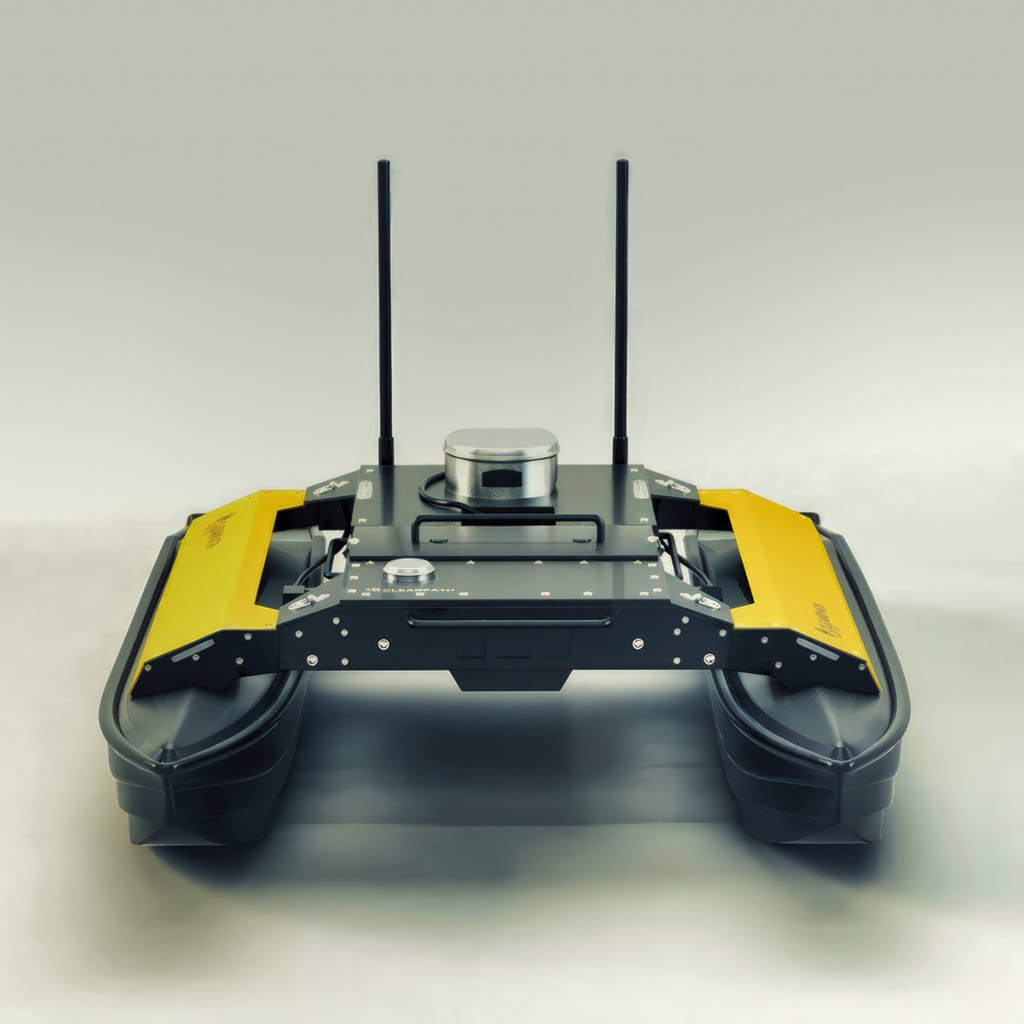

Universal Robots, ClearPath Robotics, and Manufacturers Like Them Ship 7CGI Renders
Since 2015 we have supported industrial and manufacturing teams with product renders, CGI imagery, and technical visuals used across sales, engineering, and documentation. A good share of that work sits under NDA, so the strongest examples never reach this page.





Industrial Rendering Samples for Machinery and Equipment
See how we present complex industrial products with clean angles, consistent lighting, and details that support both sales and engineering review.
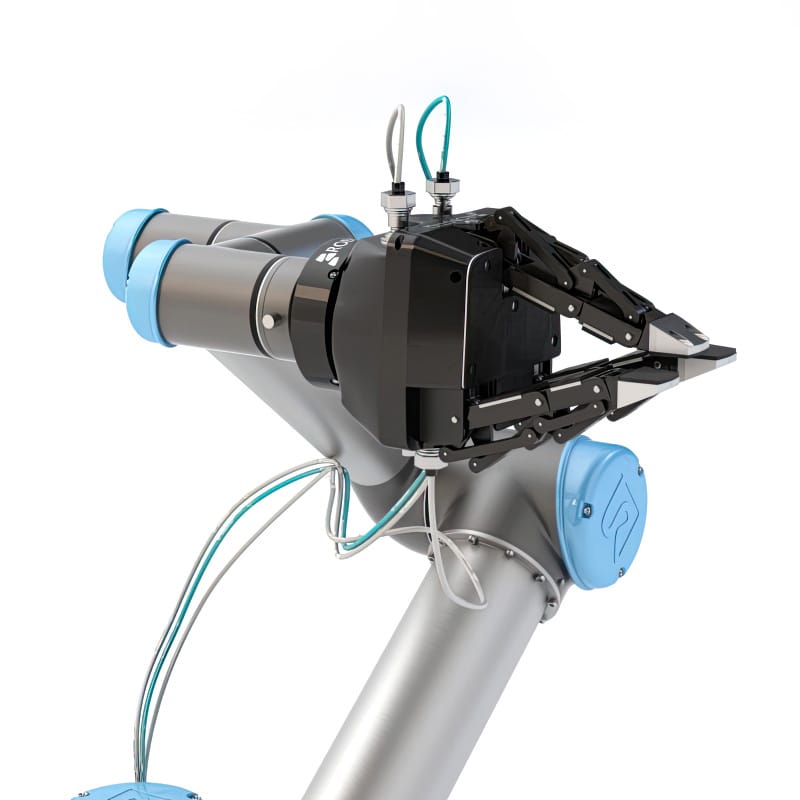
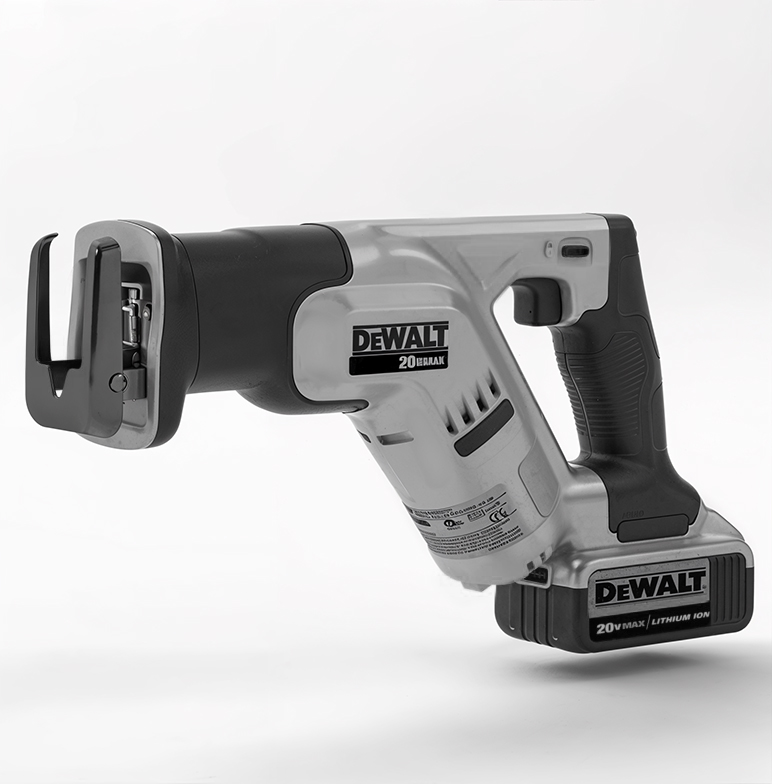


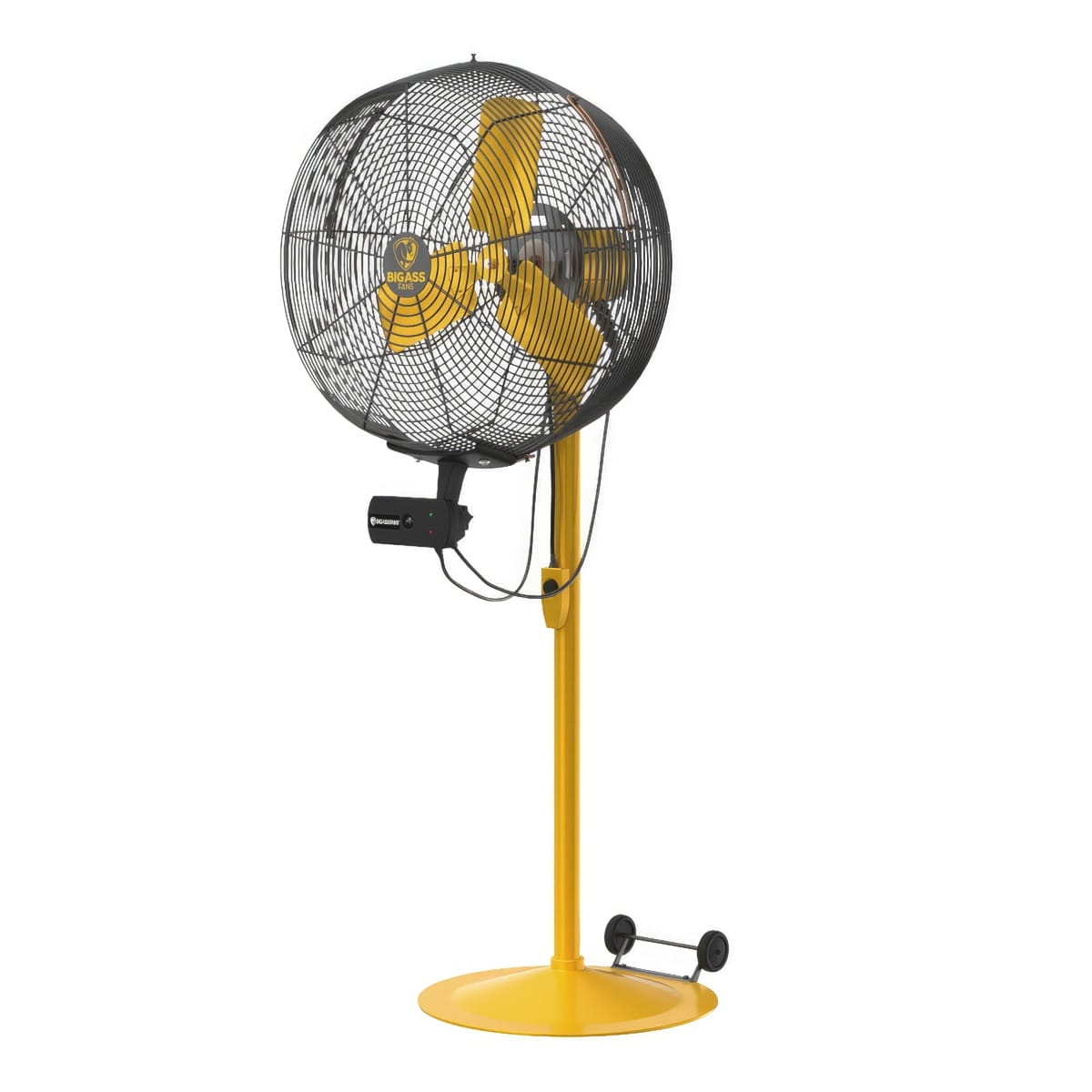
Industrial Categories We Render
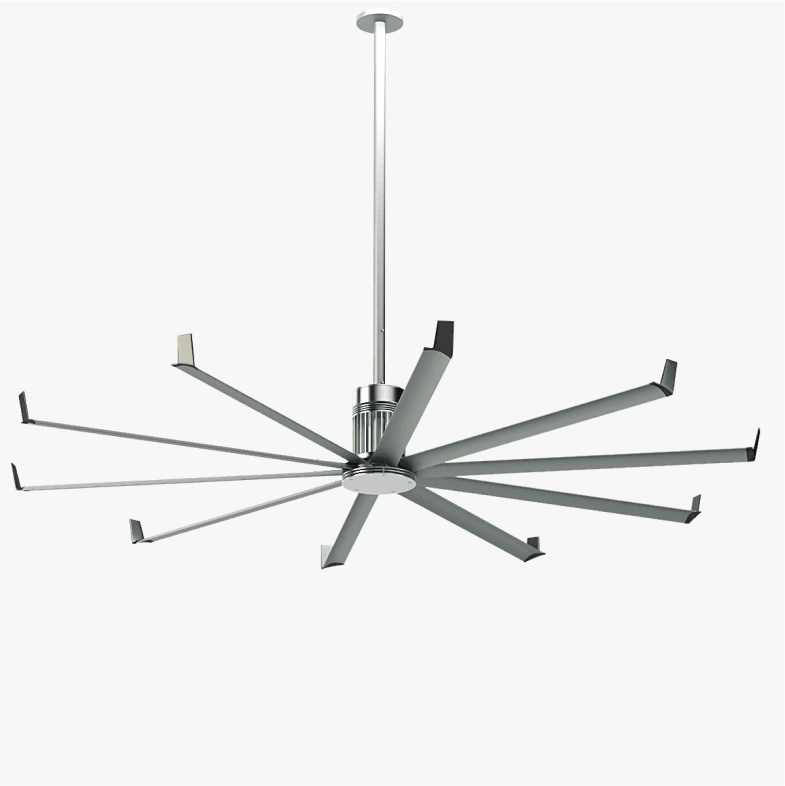
Industrial product covers buyers with very different problems. Here is what changes between them, and what we watch for in each.
Robotics and Factory Automation
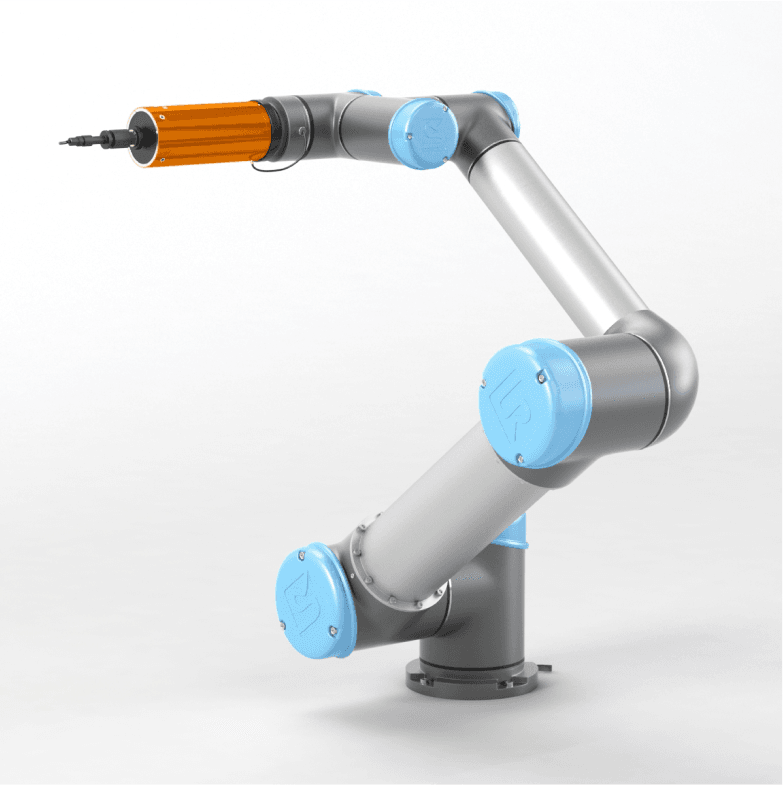
Collaborative and industrial arms, end effectors and grippers, AGVs and AMRs, machine vision rigs, conveyors, and complete work cells. The hard parts are articulated assemblies that have to stay inside a real reach envelope, the polymer against anodized aluminum finish problem, cable carriers and dress packs, and safety guarding that has to look like it would pass an audit. Motion matters more here than in any other category. A cobot still is fine, but a cobot cycling through a pick and place tells the story.

Heavy Machinery and Industrial Equipment
Presses, pumps, compressors, CNC and machine tools, forklifts and material handling, agricultural and construction equipment, HVAC units, and process skids. These are large assemblies, and the challenge is scale legibility. A render with no size cue reads as a desktop model. We handle that with environment, ground contact, and where it suits the shot, a human figure. Hydraulic runs, decals and livery, and the difference between a factory fresh finish and one that has been on a site for two years all get treated deliberately rather than left to a default shader.
Medical and Laboratory Devices
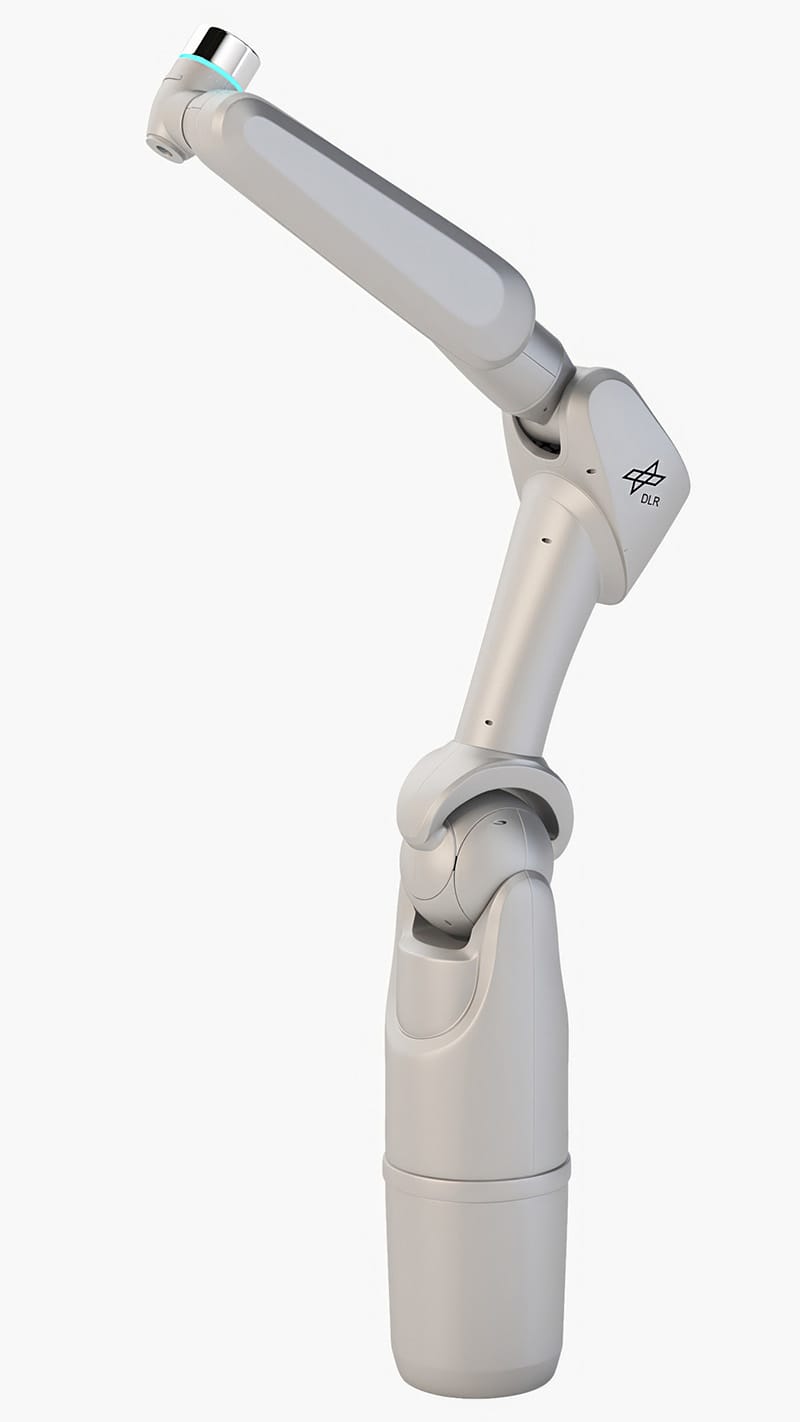
Surgical instruments, diagnostic and imaging equipment, lab automation and analyzers, single use devices, and the enclosures around all of it. Two things separate this category. First, the environment has to be credible to clinicians, because clean room and operating room lighting behaves in a specific way and medical grade polymers and polished stainless are unforgiving materials. Second, the copy around the image is regulated territory, so we render what the device is and does and stay clear of anything that reads as a clinical claim. Renders here commonly support regulatory submissions, instructions for use, and pre-launch collateral for devices not yet cleared for sale.
Consumer Electronics and Enclosures
Controllers, sensors, handhelds, wearables, PCBs and connectors, and anything with a screen. Precision is the whole game: gap and flush between housing parts, micro textures on a soft touch surface, the exact behavior of bead blasted versus brushed metal, and screen content that has to be pixel correct and color managed rather than approximated. This category also generates the most variants. A product line in six colorways across four SKUs is twenty four images, and that is work renders do far better than a photo studio.
Industrial Process, Plant, and Line Layout
Production lines, process skids, piping and tanks, warehouse automation, and full factory floor layouts. This work sits between product rendering and architectural visualization, and 7CGI does both, which is why it lives here rather than on a separate page. It is typically used to win approval for capital expenditure, to plan a line before the concrete is poured, and to train operators on a facility that does not yet exist. When a project needs the building as well as the equipment, our architectural visualization team handles the envelope so both sets of imagery stay consistent.
What You Get
Most industrial projects use three or four of these. You do not need to know which at the quoting stage. Tell us where the images will be used and we will tell you what the job needs.
Studio and white background stills
The catalog and product page workhorse, delivered with transparent background versions for layout flexibility.
In-context and environment stills
The machine on a factory floor, in a lab, or on a jobsite. This is what sales collateral runs on.
Exploded views
Every part separated along its assembly axis for manuals, parts catalogs, and service documentation.
Cutaway and ghosted views
A sectioned or semi transparent housing showing internal mechanism, which is the fastest way to explain how something works.
Technical illustration and line art
Clean vector style output for print manuals and instructions for use, where a photoreal image is the wrong register.
360 degree spins and turntables
Interactive rotation for a product page.
Product and process animation
A machine cycling, an assembly sequence, material moving through a line, or an installation procedure.
Configurator asset sets
Every colorway, finish, and option combination rendered to one consistent spec so a configurator has a real image behind every choice.
AR ready and web 3D assets
glTF and USDZ files so a buyer can place your equipment at true scale on their own floor before committing.
3D print ready models
Models for physical prototyping and trade show scale models.
How an Industrial Rendering Project Runs, Start to Finish
Six stages with one purpose: catch disagreements while they are still cheap to fix.
Brief and file review, free and usually same day
Send your CAD files, technical drawings, or photographs
We open them, confirm what is usable, and flag missing or problem geometry
You get an agreed shot list, a fixed price, and a delivery date
There is no charge and no obligation at this stage. We look at the actual files before quoting, which is why the number we send is the number you pay.
CAD preparation
Broken solids repaired and open gaps closed
Part density reduced only where it cannot affect the silhouette
Assembly organized so materials can be assigned cleanly
Design intent is preserved throughout. We optimize your data for rendering; we do not redesign your product.
Materials and lighting
Finishes built to your RAL or Pantone references, spec sheets, or physical samples
Lighting set for the context the image will live in
Camera angles laid out against the agreed shot list
This is where an industrial render is won or lost. Anodized, powder coated, and painted surfaces sitting next to each other behave very differently under light, and approximating them is the fastest way to make a machine look generic.
Draft render for approval
Low resolution camera drafts sent to you
Composition, angle, crop, and background signed off
Changes made before any final quality rendering starts
Moving this checkpoint early is the single biggest reason our industrial projects finish inside the included revision rounds. Changing a camera here costs minutes. Changing it after final render costs a day.
Final render and post-production
Full-resolution rendering at your intended output size
Color-managed post-production
Delivery in the formats your team actually uses
Tell us the end use and we render for it, rather than upscaling something later.
Revisions and handover
Two revision rounds included in every quote
Any further rounds billed hourly at a rate agreed in advance
Full commercial usage rights transfer to you on final payment
No open ended scope and no surprise invoices. If you want the source scene files as well, ask at quoting stage so we can scope it in. There is more detail on our 3D rendering process page.
Files, Formats, and Confidentiality
What We Can Work From
STEP, IGES, Parasolid, SolidWorks part and assembly files, DWG, SKP, FBX, OBJ, 3DS, STL, and PDF drawings. Native CAD is ideal because the geometry arrives dimensionally correct. If all you have is a set of 2D drawings, photographs, or a sketch on paper, we can model from those instead. It adds modeling time to the quote, and it works.
What You Receive
JPG and PNG including transparent background, TIFF and layered PSD when your team needs to composite, MP4 and MOV for animation, GIF for email and web, and glTF or USDZ for AR and web 3D. Tell us the intended output size and we render for it.
Confidentiality
A large share of our industrial work involves products that have not launched. We sign your NDA before any files transfer, or supply ours if that is simpler. Project files stay on access-controlled storage, access is limited to the artists assigned to your job, and working files are deleted on request at project close. Retention of finished renders follows the project agreement. Nothing goes into our portfolio, onto social media, or in front of another client without your written approval.
3D Rendering Versus Product Photography for Industrial Equipment
Photography is the better choice when your product is finished, small enough to ship to a studio, and you need one or two images. Past that point the economics invert, and for industrial equipment they invert fast.
| Criterion | Photography | 3D Rendering |
|---|---|---|
| Product must physically exist | Yes | No |
| Machine must be shipped or crated | Usually | Never |
| Cost of the tenth camera angle | Another shoot day | Marginal |
| Colorway and SKU variants | One unit each | Material swap |
| Change after delivery | Reshoot | Re-render |
| Internal, cutaway, exploded views | Needs a sacrificed unit | Standard |
| Physically impossible viewpoints | No | Yes |
| Production-line downtime | Often required | None |
| Consistency across a full catalog | Hard to hold | Exact |
| Imagery before production starts | No | Yes |
The decisive row for most manufacturers is the last one. If you are launching at a trade show three months before the first unit leaves the line, rendering is not the cheaper option. It is the only one.
What Industrial Product 3D Rendering Costs
Simple industrial renders start at around $200 per image. Where a specific project lands depends on six things.
- Assembly complexity, from a single housing to a machine with thousands of parts
- What data exists, since clean native CAD costs less than modeling from 2D drawings or photos
- Number of angles and views, because the first image carries the setup cost and each one after is cheaper
- Scene type, white background against a built factory or lab environment
- Realism target, standard catalog quality against premium hero imagery
- Timeline, standard scheduling against a rush slot
| Project type | Typical scope | Indicative range |
|---|---|---|
| Single-part still | One component or housing, white background, clean CAD supplied | From $200 per image |
| Equipment on white | Full machine across 3 to 5 angles, CAD supplied | Quoted by scope |
| In-context scene | Machine placed in a built factory, lab, or site environment | Quoted by scope |
| Exploded or cutaway | Sectioned or separated assembly laid out for callouts | Quoted by scope |
| Product animation | 15 to 60 second sequence, machine cycle or assembly | Quoted by scope |
| Catalog or bulk | Ten or more SKUs rendered to one consistent spec | Volume pricing, ask |
Two revision rounds are included in every quote. Bulk and multi-project work is discounted, so if you are rendering a catalog rather than a product, say so in your first message and we will price it as a program.
Turnaround Times
| Complexity | Example | Delivery |
|---|---|---|
| Simple | Single component or housing, clean CAD, white background | 1 to 3 business days |
| Medium | Full machine across several angles with light environment work | 1 to 2 weeks |
| Complex | Large assemblies, exploded views, built environments, animation | 2 to 3 weeks |
| Modeled from 2D | No CAD available, built from drawings or photographs | Add 3 to 7 days |
Teams in the United States and Bangladesh mean work continues across time zones. Files sent at the end of a US business day are usually in progress before the next one starts. Rush scheduling is available on most project types, so tell us your deadline in the first message and we will confirm whether it is achievable before you commit.
Who We Work With
Manufacturers and Equipment Suppliers
Heavy machinery through to small appliances. Renders let you show a full product range, every finish and every option code, without crating a single unit or interrupting the line. For OEMs supplying distributors and resellers, one consistent render set keeps your product looking the same across every channel-partner catalog.
Engineers and Process Designers
Assembly lines, fluid and material flow, plant layouts, and installation sequences broken into stages people can follow. Used to secure internal approval, plan a line before construction, and hand contractors something less ambiguous than a drawing set.
Marketing and Sales Teams
Catalogs, product pages, booth graphics, and campaign assets from a single source of truth. When engineering changes a part you re-render, rather than rebooking a studio and reshooting a range. If you sell online as well, our guide to 3D product rendering for e-commerce covers what changes.
Product Designers and Startups
Pitch a product that exists only as CAD. Renders let you test market response, open pre-orders, and raise money against a design before you have spent on tooling.
Technical Documentation Teams
Exploded diagrams, part callouts, and service sequences generated from the same models as the marketing imagery, so the manual and brochure show the same product. Delivered photoreal or as clean line art depending on the document.
Why Industrial Teams Choose 7CGI
Industrial teams do not just need visuals that look good. They need renders that are technically credible, easy to approve internally, and strong enough to carry a launch.
Ten years and 1,000+ projects in this specific work
Since 2015, 7CGI Limited have delivered thousands of images across precision parts, complex machinery, robotics, and process equipment, with a team of more than twenty artists. That experience shows up in the things a brief cannot specify: correct proportions, believable materials, and the judgment to know that a weld seam or a cable route is the first detail your engineer will check.
CAD first, not photo first
We work directly from your engineering data. Files are optimized for rendering while design intent is preserved, which means fewer correction cycles and renders your engineering team recognizes as their product. Most industrial projects reach final delivery inside the two included revision rounds.
Two studios, two time zones
Teams in Beaverton, Oregon and Dhaka, Bangladesh give overlapping coverage of the US and European working day, faster turnaround on time sensitive work, and pricing a single market studio cannot match.
Predictable delivery
A fixed quote before work begins, draft renders approved before final quality, two revision rounds included, and anything extra billed at a rate agreed in advance. No open ended scope and no surprise invoices.
The full visualization range under one roof
Stills, animation, configurator sets, AR assets, and when a project needs the building as well as the machine architectural visualization from the same team. Related work includes furniture rendering, jewelry rendering, and 3D packaging rendering.
Client Results from Industrial Product 3D Rendering
Senior Design Engineer, Industrial Manufacturing
USA
Really solid work from 7CGI. The barge concept renders looked realistic and professional, and feedback and revisions were handled quickly. Communication was clear the whole time.
Operations Manager, Manufacturing Firm
USA
7CGI process renders allowed us to visualize our entire manufacturing line before breaking ground. The detail helped us secure investment faster than expected.
Head of Engineering, Automotive Supplier
USA
The exploded views 7CGI produced were essential for our maintenance training. They turned complicated manuals into intuitive, easy to follow visuals.
Marketing Director, Medical Device Company
USA
Our product launch was scheduled months ahead of production. Thanks to 3D renders, we already had marketing assets and secured pre-orders.
Other Ways We Can Help
Industrial work rarely arrives on its own. These are the services our manufacturing clients pair with it most often.


Let’s define your vision
Share your project goals, target buyer, and launch plans to ensure our studio is the perfect fit.
Contact With AbdullahIndustrial 3D Rendering FAQs
What industrial and manufacturing teams ask before starting a project. If your question is not here, send it to abdullah@7cgi.com and you will get a straight answer.
What is industrial product 3D rendering?
It is the process of turning CAD files, technical drawings, or a prototype into photorealistic images and animations. Unlike a CAD screenshot, a render adds realistic materials, lighting, and environments, producing visuals accurate enough for engineering review and polished enough for marketing, sales, and manuals.
What files do you need to get started?
STEP, IGES, Parasolid, SolidWorks, DWG, SKP, FBX, OBJ, 3DS, STL, and PDF drawings all work. Native CAD is best because the geometry is already dimensionally correct. If you do not have CAD, we can model from 2D drawings, photographs, or sketches, which adds modeling time to the quote.
How long does a project take?
Simple single component renders take 1 to 3 business days. Medium complexity work, such as a full machine across several angles, takes 1 to 2 weeks. Complex assemblies, built environments, or animation take 2 to 3 weeks. Add 3 to 7 days if we are modeling from 2D. Rush scheduling is available on most project types.
How much does industrial product 3D rendering cost?
Simple renders start at around $200 per image. Final pricing depends on assembly complexity, whether usable CAD exists, number of views, scene type, realism level, and turnaround. We open your files before quoting, so the fixed price we send is the price you pay.
How many revision rounds are included?
Two, on every industrial rendering project, at no extra cost. Additional rounds are billed hourly at a rate agreed before any further work starts. Because we get camera drafts approved before final rendering, most projects finish inside the included rounds.
Do you render industrial processes, production lines, and plant layouts?
Yes. Production lines, process skids, piping and tanks, warehouse automation, and full factory floor layouts are regular work for us. This sits between product and architectural visualization, and we do both in house so a project that needs the building as well as the equipment stays with one team.
Do you work with OEM manufacturers and their distributors?
Regularly. A consistent render set is one of the most useful things an OEM can give a channel partner, because every distributor catalog then shows your product the same way at the same quality, without each of them arranging their own photography. We can deliver a single library or per partner variants with different backgrounds and crops.
Do you sign an NDA?
Yes, before any files transfer. We will sign yours, or supply ours if that is simpler. Access is limited to the artists assigned to your project, working files are deleted on request at project close, and nothing goes into our portfolio or onto social media without your written approval.
Can you render products that have not launched yet?
A large share of our industrial work is exactly that, equipment being marketed months before the first unit exists. Renders let you open pre-orders, brief distributors, and book trade show graphics against a design rather than a finished product. This is handled under NDA as standard.
How dimensionally accurate are the renders?
When we work from native CAD, geometry stays true to your model, because our preparation pass repairs and optimizes rather than reshapes. Where we reduce part density for render performance, we do it only where it cannot affect the silhouette or any visible edge. If we have modeled from 2D or photos, we will tell you plainly which dimensions were derived and which were interpreted.
Can you match our exact brand colors and material finishes?
Yes. Send RAL or Pantone references, finish specs, or physical samples and we will build materials against them rather than approximating by eye. This matters most where anodized, powder coated, and painted surfaces sit next to each other, because they behave very differently under light and getting it wrong is the fastest way to make an industrial render look generic.
Can you handle a full product catalog?
Yes, and it is where rendering beats photography by the widest margin. Once a product is set up, additional SKUs, colorways, and option codes are largely material and configuration changes rather than additional shoots. Catalog and multi project work is priced as a program, so tell us the SKU count in your first message.
Do you produce animated demonstrations and explainer videos?
Yes. Machine cycles, assembly sequences, installation and service procedures, material flow through a line, and explainer content for launches or training. Typical sequences run 15 to 60 seconds, delivered as MP4 or MOV.
Can you create exploded or cutaway views?
Yes, and it is one of our most requested industrial deliverables. Exploded views separate every part along its assembly axis for manuals and parts catalogs. Cutaways and ghosted views section the housing to show internal mechanism. Both can be delivered photoreal or as clean line art for print documentation.
Can you render products at concept or prototype stage?
Yes, at any stage of development. Concept stage rendering is often the most valuable, because it lets you test a design with stakeholders and customers while changes still cost hours instead of tooling.
Do you also create engineering 3D models?
We create 3D models for visualization and for 3D printing. We do not create models intended to be reverse engineered into manufacturing data. If you need production ready engineering geometry, we will tell you upfront that it sits outside what we do.
Who owns the final renders?
You do. Full commercial usage rights to the delivered images and animations transfer to you on final payment, with no per use or time limits. Source scene files can be supplied on request, so ask at quoting stage and we will scope it in.
Do you offer discounts on bulk orders?
Yes. Bulk projects, multi SKU catalogs, and ongoing retainer work are all priced below single project rates. Send the scope and we will quote it as a program.
Loading secure form…