

Surface Vessel Rendering for a Product Launch
A twin-hull unmanned surface vessel rendered as white background catalog images and hero shots, so the product could be shown to buyers and investors before manufacturing.
Surface Vessel Rendering
Hero Shots of the Surface Vessel
Eye-level views that present the twin hulls, antennas, and deck as a finished product.
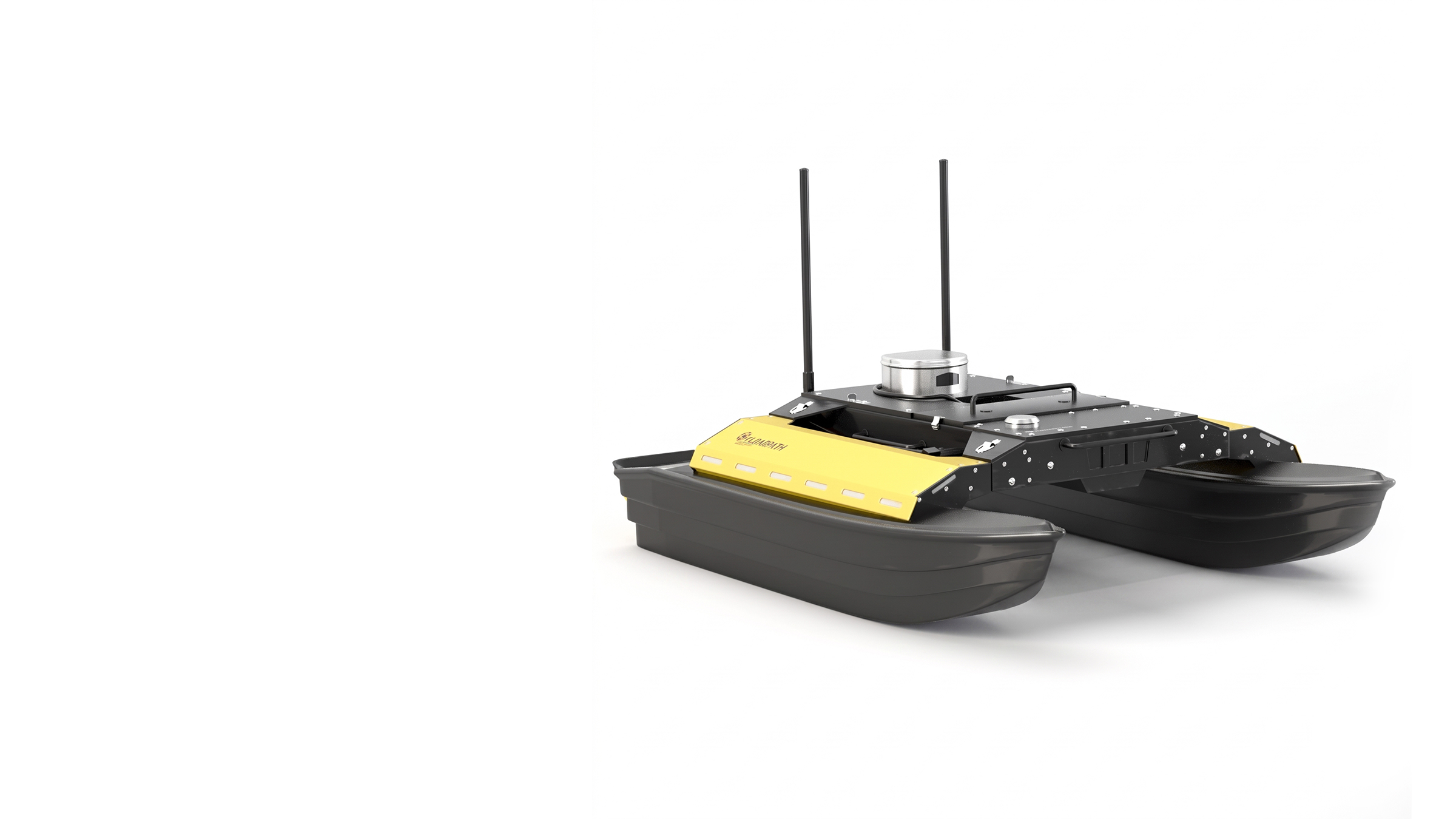

White Background Catalog Renders
High angles that show the deck layout, sensor housing, and stern thrusters.


Project Summary
7CGI modeled an unmanned surface vessel in 3ds Max and rendered it in V-Ray as white background catalog images and hero shots. The renders replace product photography and let the product be presented to buyers and investors before manufacturing.
- Product
- Twin-hull unmanned surface vessel
- Service
- 3D product rendering
- Software
- 3ds Max and V-Ray
- Deliverables
- White background catalog renders and hero shots
- Production time
- 33 hours
The Client’s Goal
The client wanted industrial product renders that could do three jobs:
Catalog-quality images without a photoshoot.
Show the finished product before production starts.
A premium, finished look that makes the product credible at first glance.
The Problem the Visuals Solved
Every configuration or color option would otherwise need its own photoshoot.
One 3D model covers every angle now and every variant later.
How We Built the Renders
Model the vessel in 3ds Max
Twin hulls, deck plates, yellow hull covers, antennas, sensor housing, handles, latches, and thrusters, built as one detailed model.
Set up materials in V-Ray
Satin black hulls, yellow covers, matte black deck plates with metal fasteners, and a brushed metal sensor housing, tuned for studio light.
Render the hero shots
Eye-level three-quarter and front views that present the vessel as a finished product.
Render the catalog views
High-angle and top-down white background shots that show the deck layout and stern thrusters.
Final Takeaway
One detailed model gave the product launch-ready visuals in 33 hours of production, and it can produce new variants without a photoshoot.
CGI makes it easier to create variants and keep every image consistent.
Strong product visuals shape perceived quality before a customer ever touches the product.
Questions About This Project
Yes. This vessel was rendered from a 3D model so it could be presented to buyers and investors before manufacturing.
33 hours of production time for the model, materials, hero shots, and catalog renders.
Yes. Every image on this page is a 3D render made in 3ds Max and V-Ray. See how 3D renders compare with product photography.
3ds Max for modeling and V-Ray for materials, lighting, and rendering.
Renders at 7CGI start at $150 per image, and variations of an existing render cost less. See our product rendering services for details.